Hi! Let’s be honest – if you’re reading this, you have likely faced one of those mornings. You ran your fingers through your hair or grabbed your hairbrush.
You felt a jolt of panic when you saw how much hair came out. Or it was the shower drain. Or your pillow. You’re here because you’re fed up with your thinning hair. You want real answers of hair care tips to control hair fall, not another tip to “drink more water.”
Take a breath — you’re not alone, and this is more common than you think. Hair fall is a common problem in India and worldwide, and these hair care tips can help. Many people face it. Young women, working mothers, and teenagers are especially affected.
Hormonal changes can also cause hair fall. The good news? Most hair fall is reversible, and you don’t always need expensive treatments to fix it. The right hair care tips and home remedies for hair fall in India, when applied regularly, can create a significant impact.
This guide shares 15 hair care tips to control hair fall. It explains why hair falls out and when to see a doctor. If you’re losing hair from stress, postpartum changes, or not enough nutrients — this is for you.
Why Hair Fall Is Becoming So Common
Modern lifestyle habits work against healthy hair. A poor diet can harm you. Chronic stress adds to the problem. In fact, hair fall due to stress is one of the most common complaints dermatologists hear. Pollution is also a factor. Heat styling damages hair. Tight hairstyles can pull too much.
Hormonal changes play a role, too. In India, hard water is a big issue. Seasonal changes also play a role. Rising stress levels are another trigger.
Nutritional deficiencies can lead to hair thinning. This is why good hair care tips for hair fall are more important now than ever.
Can natural remedies truly promote hair regrowth?
Yes, with conditions. Natural remedies work best when you fix the cause. This can be a nutritional deficiency. It might also be poor scalp health, stress, or hormonal imbalance.
They’re less effective for genetic hair loss or advanced alopecia. The key is consistency; these aren’t overnight fixes and need weeks to months of regular use.
Understanding Hair Growth Before Trying Any Remedy
Before trying any remedy, it helps to know how hair actually grows. This sets realistic expectations for results.
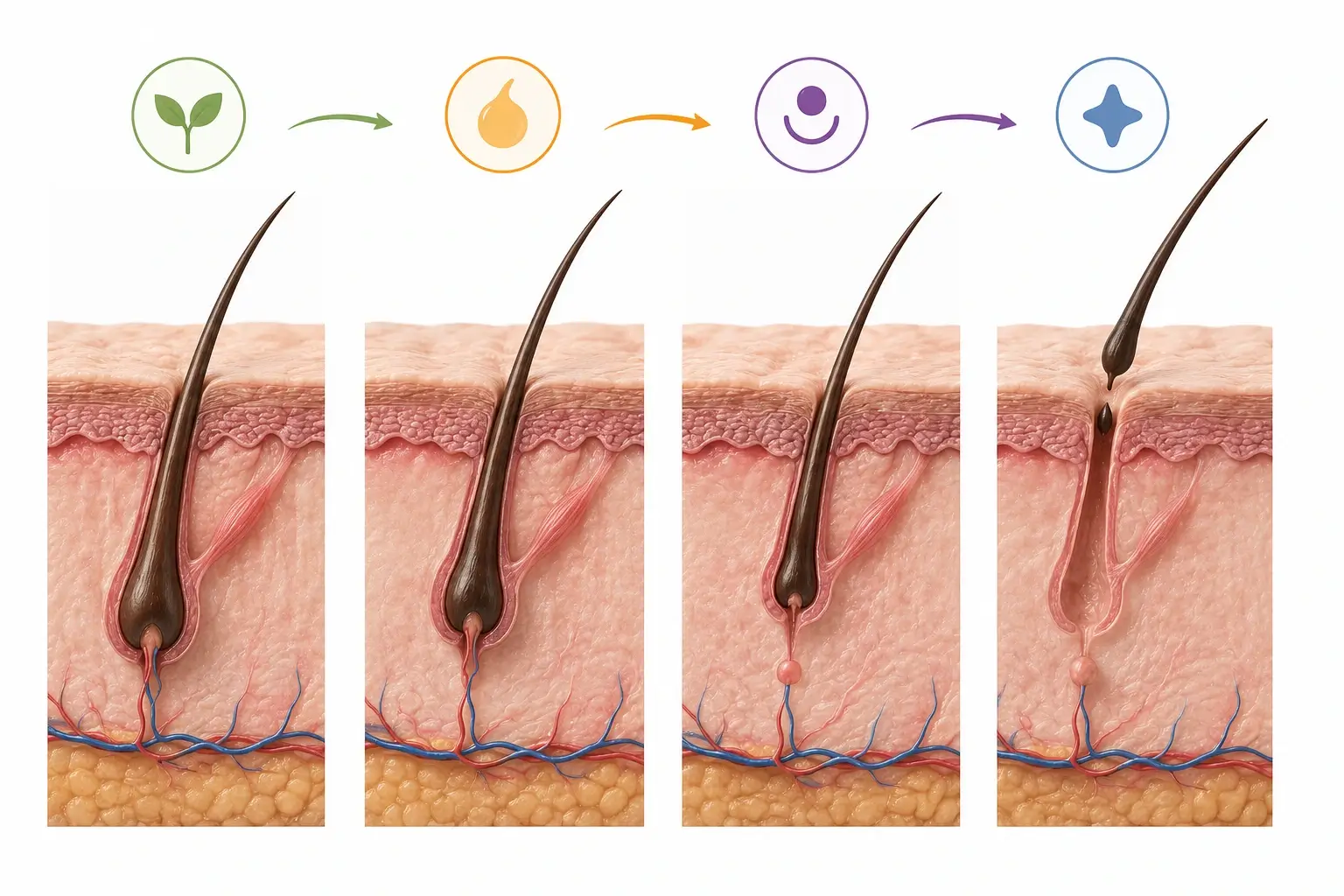
The Hair Growth Cycle
Every strand of hair goes through four stages. Understanding this cycle sets realistic expectations for any hair care tips you try.
- Anagen (growth phase): The active growth stage, lasting 2 to 7 years depending on genetics
- Catagen (transition phase): Growth slows and the follicle shrinks, lasting 2 to 3 weeks
- Telogen (resting phase): The follicle rests for roughly 3 months while old hair stays in place
- Exogen (shedding phase): Old hair falls out as new hair grows. This is when you see hair on your brush or pillow
What Counts as Normal Hair Fall?
Losing 50 to 100 hairs daily is completely normal. The scalp has over 100,000 follicles. So, this level of shedding doesn’t cause visible thinning.
Signs of normal shedding include:
- Hair on your brush after styling
- A few strands on your pillow
- Slight shedding when washing
- Seasonal increases in autumn and spring
Signs of excessive hair loss include:
- Clumps in the shower drain
- Thinning on the crown or temples
- A wider parting
- Bald patches
- Hair coming out with the root attached
Common Causes of Hair Loss and Thinning
Hair fall rarely has just one cause. Genetics, hormones, nutrition, and lifestyle can all play a part, often together.
Genetic Hair Loss (Androgenetic Alopecia)
DHT (dihydrotestosterone) links to the most common form of hair loss. In men, it leads to a receding hairline and thinning at the crown. In women, it causes diffuse thinning on the top of the scalp. Natural remedies can slow this but cannot reverse it completely.
Hormonal Changes
- PCOS: Increases androgen levels, causing scalp thinning. This is common in Indian women aged 18 to 35
- Pregnancy: After delivery, estrogen levels drop. This can cause telogen effluvium. It leads to sudden hair shedding. This usually happens 3 to 6 months later. It’s temporary
- Menopause: Estrogen drops. Follicles become more sensitive to DHT. This leads to noticeable hair thinning in the 40s and 50s
- Thyroid problems: Hypothyroidism and hyperthyroidism thin hair; treatment can help it grow back
Nutritional Deficiencies
A common cause, often missed, lies in vegetarian diets. This is especially true in India.
- Iron: Low ferritin is a leading cause of hair fall in women, especially with heavy periods
- Vitamin D: More than 70% of Indians lack enough, leading to more shedding
- Zinc: Supports protein synthesis in follicles; vegetarians are most at risk
- Protein: Keratin makes up hair. Not getting enough protein takes resources from hair growth
- Biotin: Essential for keratin production; true deficiency is rare, but supplementation is popular
Stress, Scalp Health, and Styling Habits
Chronic stress makes follicles enter the resting phase too soon. This leads to shedding 2 to 3 months later. However, managing stress makes it reversible.
Dandruff and clogged follicles stop hair from growing. Heat styling weakens hair. Chemical treatments do too. Tight hairstyles can cause traction alopecia.
Medical Conditions and Medications
Alopecia areata and lupus can make you lose hair. Scalp infections can do this too. Some medicines cause hair loss as well.
These are chemotherapy, beta-blockers, and antidepressants. Always disclose medications to a dermatologist.
15 Best Hair Care Tips and Natural Remedies for Hair Fall
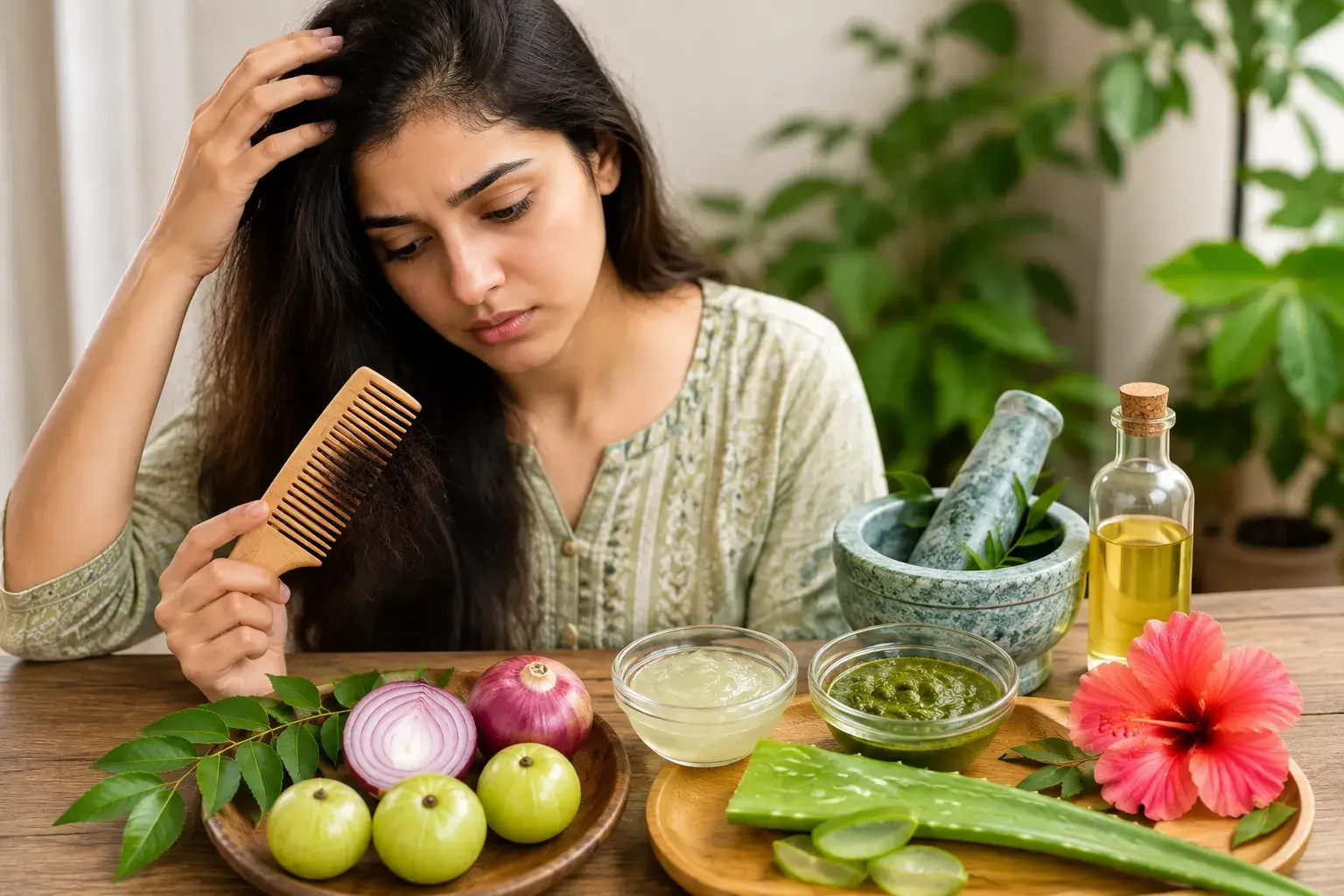
Here are 15 tried-and-tested remedies you can start using right away. Most use ingredients you already have at home.
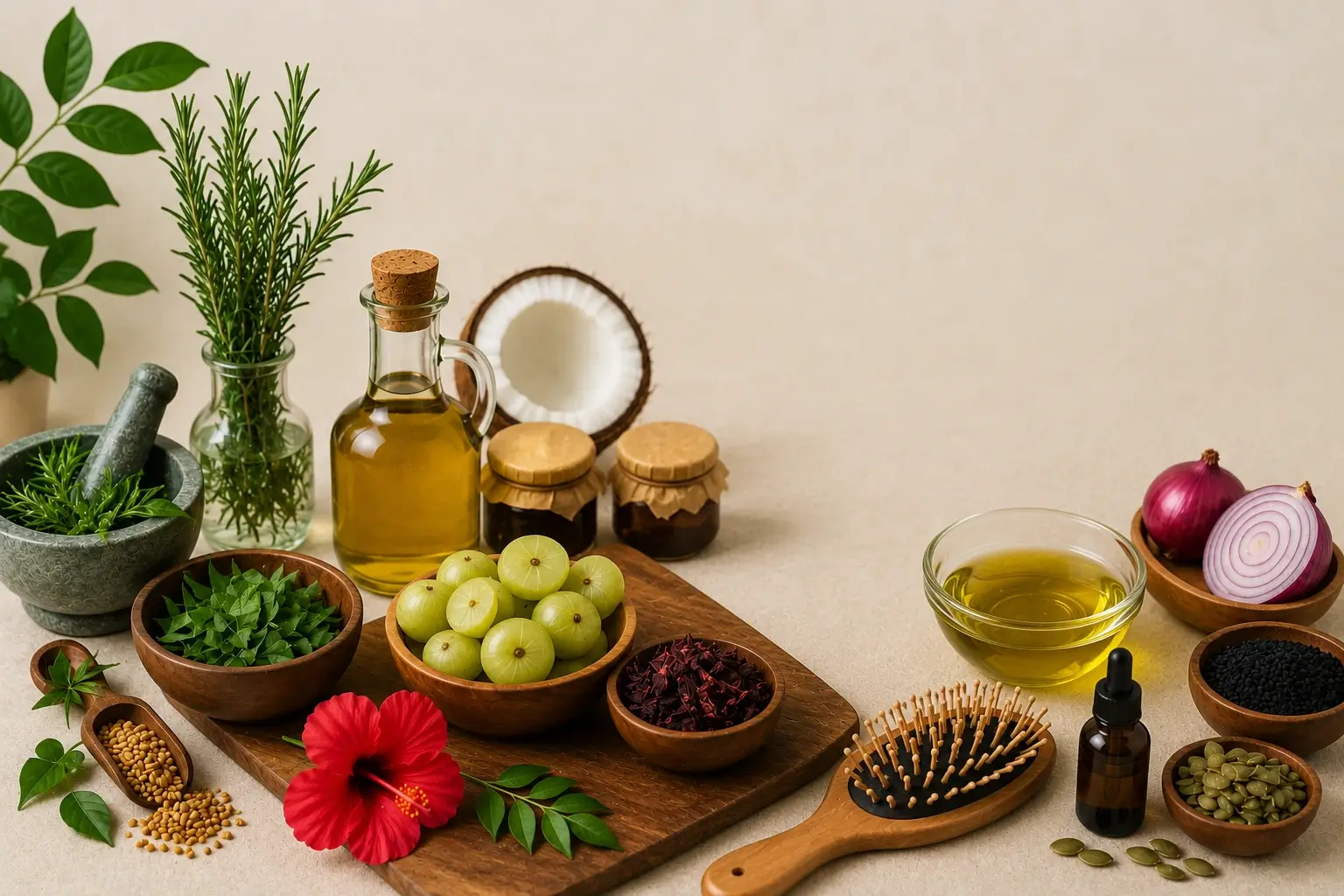
1. Scalp Massage
Increases blood flow to follicles. This brings more nutrients and oxygen to the roots. It also helps hair grow thicker. Do it daily for 4–5 minutes with gentle fingertip pressure, dry or with oil.
2. Rosemary Oil
A great hair care tip is to boost scalp circulation. This can help block DHT. DHT is the hormone linked to genetic hair loss. Mix a few drops with a carrier oil and massage into the scalp 2–3 times a week.
3. Peppermint Oil
Contains menthol, which boosts scalp circulation and has antimicrobial benefits. Dilute well before applying — undiluted oil can irritate the scalp.
4. Pumpkin Seed Oil
Has compounds that may block the enzyme. This enzyme changes testosterone into DHT. Functions as a daily oral supplement or in topical application to the scalp.
5. Coconut Oil
It goes into the hair shaft. This helps cut protein loss. It’s great for damaged hair. It also helps hair that has had chemical treatments. Best used as a pre-wash treatment or overnight mask.
6. Castor Oil
Moisturises the hair shaft. It also reduces breakage. However, there is little proof that it helps regrow hair. Always dilute before applying, since it is very thick.
7. Jojoba Oil
Mimics natural scalp sebum, balancing oil production and soothing dryness without clogging follicles. A few drops massaged in 2–3 times a week work well.
8. Onion Juice
Apply to the scalp for 30–60 minutes before rinsing. This product has a lot of sulphur. Sulphur is important for keratin. It also helps to make more collagen.
9. Aloe Vera
Anti-inflammatory and antibacterial — great for dandruff-related hair loss and scalp irritation. Apply fresh gel directly to the skin and leave it on for 45–60 minutes.
10. Rice Water Rinse
Contains inositol and amino acids that strengthen and add elasticity to hair. Use as a final rinse after shampooing, 1–2 times a week.
11. Curry Leaves
Combine coconut oil with protein, beta-carotene, and antioxidants. Massage it into your scalp. Do this weekly to improve scalp and hair health.
12. Green Tea
Apply cooled tea to your scalp after shampooing, twice a week. It’s loaded with antioxidants that protect your follicles from damage.
13. Hibiscus Flower and Leaves
A classic Ayurvedic remedy packed with vitamin C and amino acids. It nourishes the scalp and helps to support hair growth. Blend into a paste with coconut oil or yoghurt.
14. Ginseng
Contains active compounds that stimulate follicles and extend the hair growth phase. Available as an oral supplement or in topical serums.
15. Caffeine
Blocks DHT effects in cells. It also boosts follicle activity. Leave-on caffeine serums work better than shampoos for this reason.
Natural Supplements That May Support Hair Growth
If the diet isn’t enough, supplements can help. But test first, as too much iron or vitamin A can worsen hair loss.
- Biotin: Supports keratin production; usual dose: 2,500–5,000 mcg daily
- Vitamin D: Essential for follicle function; most Indians need 1,000–2,000 IU daily, at least 1,000–2,000 IU
- Iron: Critical for premenopausal women; test ferritin first
- Zinc: Supports protein synthesis; usual dose: 8–11 mg daily
- Omega-3: Reduces scalp inflammation. Dose: 1,000–3,000 mg EPA + DHA daily
- Collagen: Provides amino acids for keratin building
- Multivitamins: This helps hair. It has biotin, zinc, iron, and vitamin D. It fixes deficiencies
Always check your levels of iron, vitamin D, and zinc before taking them. Also, talk to a doctor before adding fat-soluble vitamins.
Melatonin for Hair Growth
Hair follicles have melatonin receptors. Melatonin applied to the scalp helps hair grow. It also lowers shedding in androgenetic alopecia. A 0.0033% scalp lotion applied nightly may improve density within 3 to 6 months.
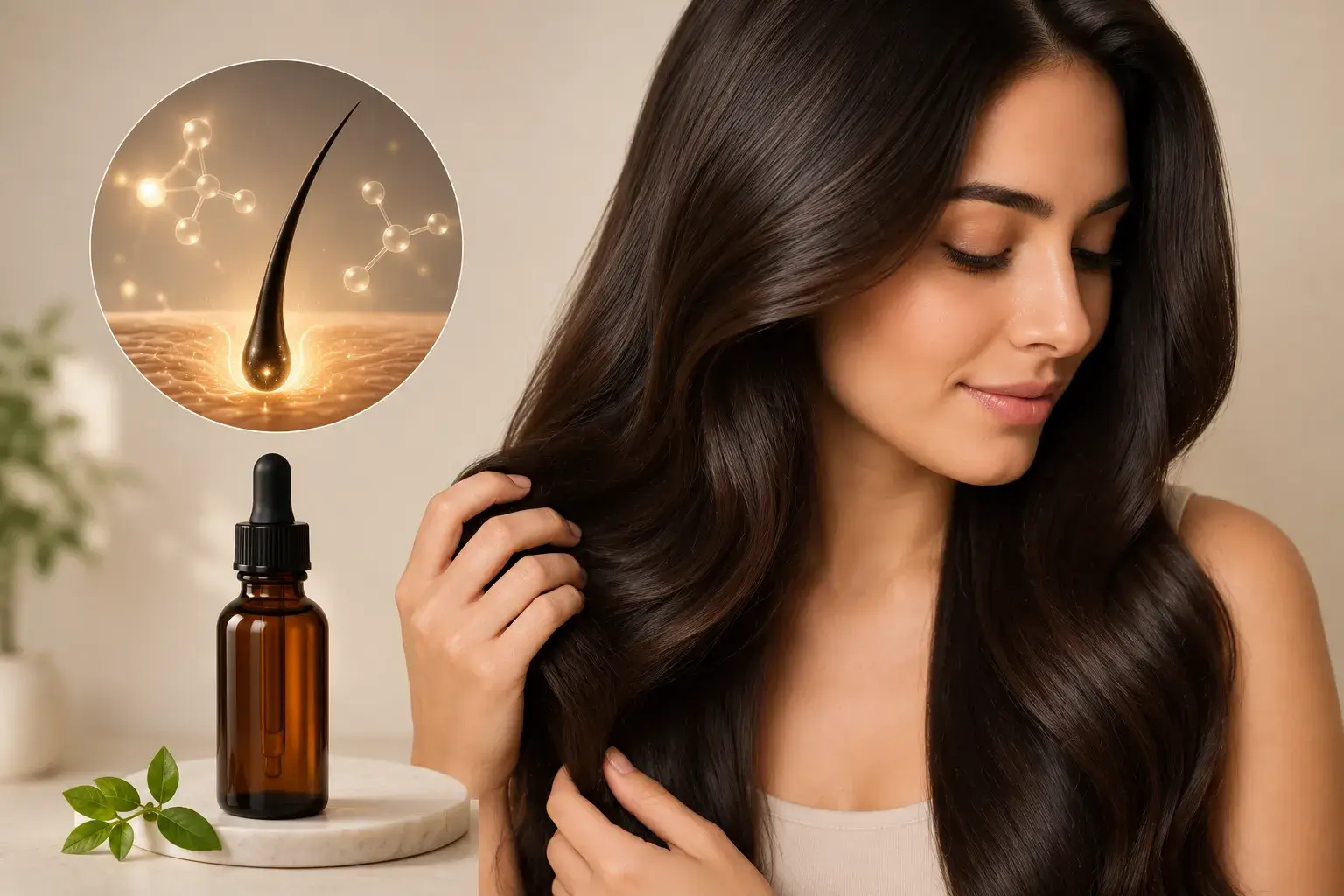
Essential Oils Comparison: Which Works Best?
Confused about which oil to pick? Here’s a quick side-by-side so you can choose based on your specific need.
| Oil | Benefit | How to Use |
|---|---|---|
| Rosemary Oil | Blocks DHT, boosts circulation | Scalp massage, 2 times a week |
| Peppermint Oil | Stimulates follicles, increases blood flow | Use diluted on the scalp |
| Pumpkin Seed Oil | DHT blocker | Oral supplement or topical application |
Verdict: Rosemary oil has the best support. Peppermint oil is great for waking up a tired scalp. Pumpkin seed oil is most effective as an oral supplement. Combine them for the best results.
Best Foods for Healthy Hair
No oil or serum can outwork a poor diet. These are the nutrients your hair needs most, and where to find them.
- Protein: Eggs, chicken, fish, lentils, chickpeas, paneer, tofu, Greek yoghurt
- Iron: Spinach, lentils, kidney beans, pumpkin seeds, and dark chocolate all have iron. They are good choices for getting iron. To absorb iron better, eat them with vitamin C
- Zinc: pumpkin seeds, sunflower seeds, cashews, chickpeas, whole grains, eggs
- Omega-3: walnuts, flaxseeds, chia seeds, fatty fish, hemp seeds
- Vitamin C: Amla, guava, lemon, orange, kiwi, bell peppers, broccoli
- Biotin: Egg yolks, almonds, sweet potato, sunflower seeds, broccoli, avocado
7 Daily Habits That Help Prevent Hair Thinning
Small daily choices matter as much as any remedy. These simple habits protect your hair from everyday damage.
- Manage stress — with exercise, meditation, and sleep. These activities control cortisol. Even 10 minutes of mindful breathing can help
- Avoid tight hairstyles — give your hairline a rest with looser styles at home
- Use gentle hair care products — sulphate-free, paraben-free shampoos with biotin or keratin
- Limit heat styling — Use the lowest setting, apply a heat protectant, and take 2–3 heat-free days each week
- Stay hydrated — aim for 8 to 10 glasses of water daily
- Sleep promotes — significant hair repair during rest. Aim for 7–9 hours
- Eat a balanced diet — no remedy outruns poor nutrition
Hair Care Myths vs. Facts
There’s a lot of confusing advice out there about hair care. Let’s clear up what’s actually true.
Does shaving make hair grow faster?
Myth — shaving affects only the shaft, not the follicle.
Does castor oil regrow hair?
Partially True, It boosts scalp health and cuts down breakage, but it does not grow hair in bald spots.
Can rice water stop hair fall completely?
No — it strengthens existing hair but does not address the root cause.
Are natural remedies better than medical treatments?
Depends on the cause. Mild hair fall and nutritional loss often get better with natural remedies. Genetic or hormonal hair loss needs medical help.
Can oils cure genetic baldness?
No — that requires medical intervention like minoxidil, finasteride, PRP, or a hair transplant.
Natural Remedies vs. Medical Hair Loss Treatments
Not sure whether to stick with home remedies or see a specialist? Here’s how the two options compare.
Natural remedies are low-risk and cheap. They work well for nutrition and scalp issues. But they are slower and not as effective for severe or genetic hair loss.
Medical treatments include:
Minoxidil is an OTC topical solution: It can slow hair loss. You will see results in 3 to 6 months. However, you need to use it for an unlimited time.
Finasteride: This is a prescription pill for men. It blocks DHT. It is not recommended for women who can have children
PRP Therapy: Platelet-rich plasma injections must have many sessions
Hair Transplant: The most permanent solution, with FUE as the modern standard
When Should You See a Dermatologist?
Most hair fall can be managed at home, but some signs need a doctor’s attention right away. Watch for these red flags.
Sudden hair loss: Losing more than 150 hairs daily or sudden clumps
Bald patches could show alopecia areata
Severe itching may signal a fungal infection or psoriasis
Scalp inflammation: Redness or swelling need proper diagnosis
Hair loss after illness: Post-COVID shedding lasting beyond six months
How Long Do Hair Care Tips and Remedies Take to Work?
Patience is the hardest part of any hair care routine. Here’s a realistic timeline of what to expect.
1 month: Reduced shedding, healthier-feeling scalp
3 months: Early signs of new growth along the hairline
6 months: Noticeable improvement in density and thickness
Results depend on age, the underlying cause, consistency, and health.
Best Hair Care Routine: Step-by-Step
Not sure where to start? Follow this simple morning, weekly, and monthly plan to build hair care into your routine.
Morning:
- Take your supplement
- Eat a protein-rich breakfast
- Style with a gentle touch
- Use caffeine shampoo on wash days
Weekly:
- Monday: Scalp massage with rosemary or peppermint oil, then shampoo
- Wednesday: Onion juice treatment, then shampoo
- Friday: Deep conditioning mask (aloe vera, coconut oil, hibiscus)
- Any day: Rice water rinse after shampooing
- Trim split ends each month
- Review your diet and supplements
- Take a progress photo
- If hair loss continues, book a scalp check every six months
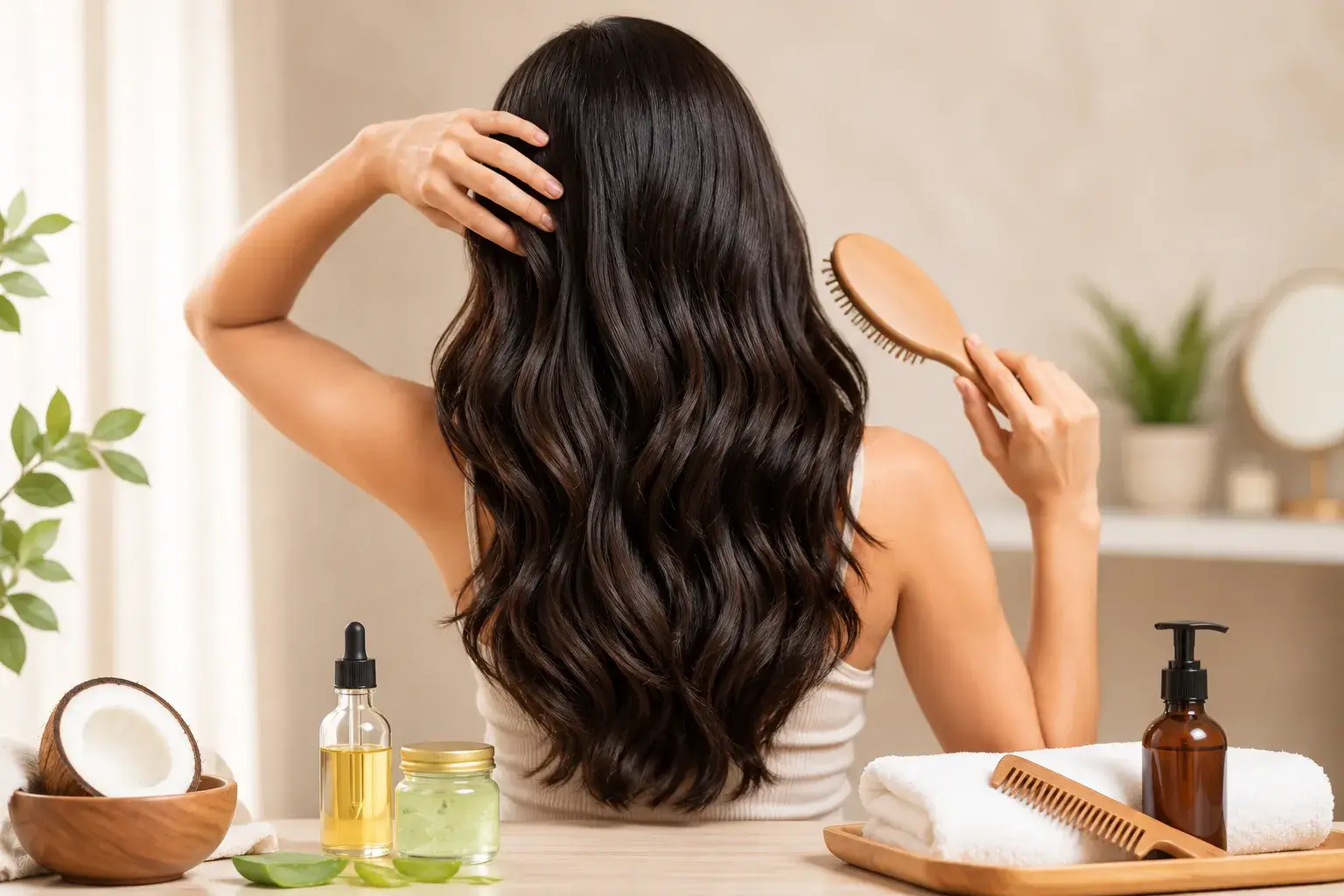
Conclusion: Home Remedies for Hair Fall
Most hair fall has a treatable cause — figuring out yours is the first step before reaching for any remedy. For hair care, start with scalp massage, rosemary oil, onion juice, and pumpkin seed oil.
However, nutrition is key. Without enough protein, iron, and vitamins, no remedy will work.
Try any remedy for at least three months before judging the results. Also, take photos to track your progress during that time.
If you’ve tried for six months without improvement, see a dermatologist. If your hair loss is sudden or severe, that’s important too. Changes in your scalp matter. Getting a proper diagnosis is the best first step.
FAQs
Q. Which natural remedy works fastest for hair fall?
calp massage with rosemary oil works best. It helps to improve thickness and growth rate.
Q. Is rosemary oil better than minoxidil?
Both show similar results over six months, with rosemary causing less scalp itching. Many people use both together.
Q. Can rice water regrow lost hair?
No — it strengthens existing hair and reduces breakage but isn’t a regrowth solution.
Q. How often should I massage my scalp?
Daily, for 4 to 5 minutes, dry or with oil. Not possible to remove the adverb. Yes, this is true for alopecia areata. However, the results for other types of hair loss are more varied.
Q. Can vitamin deficiencies cause hair loss?
Yes — iron, vitamin D, zinc, and protein deficiencies all affect the growth cycle. Get tested before assuming a deficiency.
Q. Is hair fall reversible?
Most hair fall is reversible, especially from stress, nutrition, hormones, or scalp conditions. One can manage genetic loss, but full reversal is not possible.
Q. Which oil is best for hair growth?
Use rosemary oil for results
- Apply peppermint oil for scalp stimulation
- Use coconut oil to prevent breakage
Q. Can stress cause hair loss?
Chronic stress can cause temporary hair shedding. This usually gets better within 3 to 6 months once the stress is under control.
Q. How long does it take to regrow thinning hair?
Expect 3 to 6 months for meaningful improvement with consistent care.