Almond oil for hair works mainly as a conditioning and strengthening agent — it softens the hair shaft, reduces breakage from styling, and soothes a dry, flaky scalp. It does not clinically regrow hair, but used correctly 1–2 times a week, it can noticeably improve texture, shine, and manageability within a few weeks.
This guide covers what almond oil actually does for Indian hair types, the difference between almond oil and sweet almond oil, and the correct step-by-step way to apply it for the best results.
Is Almond Oil Good for Hair?
Yes, almond oil is good for hair as a conditioning oil, though it is not a proven hair-growth treatment. Almond oil is an emollient, meaning it can fill in gaps in your hair at a cellular level, which makes hair feel smoother and gives it a softer texture over time. Its lubricating properties diminish friction during hair styling, which can make hair less prone to breakage and split ends.
However, it is important to set realistic expectations. There aren’t clinical trials that prove almond oil is effective in making hair grow, but it can make hair stronger and less prone to split ends, which means your hair growth won’t be slowed by losing damaged hair. Think of almond oil as a hair-shaft conditioner and scalp moisturiser rather than a follicle stimulant.
Sweet Almond Oil and Almond Oil: What’s the Difference?
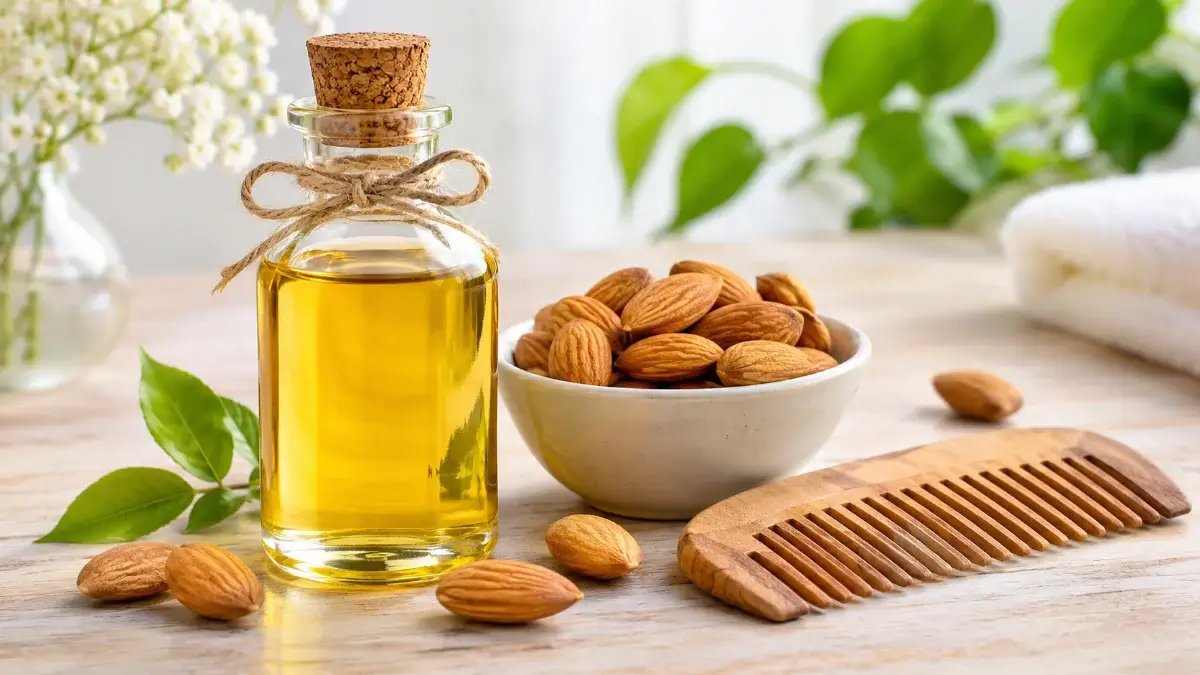
For hair care, “almond oil” and “sweet almond oil” usually refer to the same product. Sweet almond oil is the oil most commonly sold and recommended for use as a hair product. There is also a bitter almond oil, but this is chemically different and not meant for scalp use.
- Sweet almond oil — a popular ingredient in skin care and hair care products, safe for topical and cosmetic use.
- Bitter almond oil — frequently shows up as an ingredient in soaps and massage oils, but it contains cyanide so it’s not safe to eat or drink, and it is generally avoided for regular scalp application.
When a bottle in India is simply labelled “almond oil” or “badam rogan,” it is almost always sweet almond oil (also called Rogan Badam Shirin), so you don’t need to worry about picking the wrong type as long as you buy from a trusted brand.
Benefits of Almond Oil for Hair
Almond oil for hair offers several practical benefits backed by its nutrient profile and traditional use, even though strong clinical evidence for hair growth specifically is limited.
- Softens and smooths hair: Almond oil fills in tiny gaps in your hair cuticle, giving it a smoother look and reducing flyaways.
- Reduces breakage during styling: Using certain oils to treat hair can make it less prone to breakage and diminish split ends, and the lubricating properties of nut oils like almond oil diminish friction during hair styling.
- Conditions a dry scalp: Almond oil has been used to treat dry scalp conditions in Chinese and Ayurvedic medicine for centuries, and rubbing a small amount directly on the scalp increases blood flow to the area.
- Rich in nourishing compounds: Sweet almond oil is rich in oleic acid, linoleic acid, protein, omega fatty acids, vitamin E, magnesium and biotin.
- Long history in traditional skin and hair care: Historically, almond oil had been used in Ancient Chinese, Ayurvedic and Greco-Persian schools of medicine to treat dry skin conditions.
If you are also dealing with hair fall rather than just dryness, almond oil alone may not be enough. You may find it helpful to pair this routine with targeted tips from our guide on how to stop hair fall immediately at home.
How to Apply Almond Oil on Hair the Right Way
You can use almond oil as a pre-wash scalp treatment, an overnight mask, or a light finishing oil. Here is the correct step-by-step method for a scalp and length treatment.
Step-by-Step: Scalp Massage and Hair Oiling
- Take 1–2 tablespoons of almond oil in a small bowl, depending on your hair length.
- Warm it slightly by placing the bowl in a pan of hot water for a minute — never heat oil directly on flame.
- Section your hair and massage the oil into your scalp using your fingertips in gentle circular motions for 5–10 minutes to improve blood circulation.
- Run the remaining oil through the length of your hair, focusing on dry and brittle ends.
- Cover your head with a shower cap or warm towel to help the cuticles absorb the oil better.
- Leave it on for at least 30 minutes, or overnight if your scalp isn’t very oily.
- Wash off with a mild shampoo, shampooing twice if needed to remove all the oil.

Other Ways to Use Almond Oil
- As a hair mask: Mix almond oil with other hydrating ingredients, such as coconut oil, avocado, or honey, apply this deep conditioning treatment to damp hair, leave it on for 15 to 30 minutes, then rinse it out thoroughly.
- As a finishing oil: Rub a few drops into the palm of your hands and apply it to the hair after it’s been styled, or before it air dries, to lubricate dry ends.
- Mixed into shampoo or conditioner: Add a few drops of almond oil to your favourite shampoo or conditioner, or to other hair care products like a leave-in conditioner.
- Blended with other oils: You can mix almond oil with coconut oil for deeper nourishment or combine it with other scalp-friendly oils. If you want to explore a scalp-stimulating blend, see our detailed guide on rosemary oil for hair growth and how to use it.
For fine or oily hair, start with just the ends and a very small amount near the scalp to avoid a greasy look.
Dabur Almond Hair Oil: A Popular Ready-Made Option
If you don’t want to mix oils yourself, Dabur Almond Hair Oil is one of the most widely available commercial almond hair oils in India. It is used for nourishing and helping strengthen hair, addressing issues like damage, dryness and hair fall, and is formulated with almond oil, enriched with vitamin E and soya protein. The brand recommends applying it by taking a few drops on the scalp and hair, massaging gently with fingertips, and leaving it for an hour before shampooing.
Ready-made almond hair oils are a convenient option for daily or twice-weekly use, especially if you prefer a non-sticky formula over pure cold-pressed oil, which can feel heavier on some hair types.
How Often Should You Use Almond Oil on Hair?
Using almond oil 1–2 times a week as a pre-wash treatment is enough for most hair types. People with very dry, frizzy, or chemically treated hair can use it up to 2–3 times a week, while those with naturally oily scalps should limit it to once a week and apply mainly on the lengths.
Visible improvements in softness and shine usually appear within 2–4 weeks of consistent use. Since almond oil does not alter the hair growth cycle, do not expect faster hair growth or thicker regrowth from oiling alone — persistent hair fall needs a broader routine, which you can read about in our 15 hair care tips to control hair fall.
Who Should Use Almond Oil and Who Should Avoid It
- Good for: dry, frizzy, or damaged hair; those with rough ends from heat styling or colouring; people wanting a lightweight, easily available conditioning oil.
- Use with caution: people with very oily scalps or acne-prone hairlines, since leaving oil on overnight can clog follicle pores and cause breakouts along the forehead.
- Avoid or patch test first: anyone with a known tree nut allergy. Almond oil is nut-derived, and even topical use can occasionally trigger a skin reaction in sensitive individuals.
Always do a patch test on your inner arm 24 hours before applying almond oil to your scalp for the first time. A patch test reduces risk but does not guarantee that a reaction will never occur, so stop use immediately if you notice itching, redness, or bumps, and consult a dermatologist if irritation persists.

If you also struggle with an oily scalp alongside dry ends, applying oil only from mid-length to tips (and skipping the roots) can help balance both concerns. Our article on natural ways to get rid of an oily scalp has more targeted tips for this combination hair type.
Conclusion
Almond oil for hair is a safe, affordable way to soften dry strands, reduce styling-related breakage, and calm a dry scalp when used correctly and consistently. It works best as part of a complete hair care routine rather than a standalone fix for hair fall or slow growth — if shedding continues despite regular oiling, it’s worth consulting a dermatologist to rule out underlying causes.
Frequently Asked Questions
Q. Is almond oil good for hair growth?
Almond oil conditions the hair shaft and scalp well, but there is currently not enough direct clinical evidence to say that applying sweet almond oil to the scalp increases hair count or stimulates new follicle growth. It supports healthier-looking hair rather than directly speeding up growth.
Q. Can I leave almond oil in my hair overnight?
Yes, overnight application is fine for dry or normal scalps and allows deeper absorption. If you have an oily or acne-prone scalp, it’s better to limit application to a few hours and wash it out before bed.
Q. What is the difference between almond oil and sweet almond oil?
Sweet almond oil is the type most commonly sold and recommended for hair care, and in most Indian stores, plain “almond oil” bottles are already sweet almond oil, not the bitter variety.
Q. Can almond oil cause pimples or a greasy scalp?
It can if used in excess or left on too long, especially on oily or acne-prone skin. Start with a small amount, focus on the lengths rather than the roots, and wash it out thoroughly with shampoo.
Q. How is Dabur Almond Hair Oil different from pure almond oil?
Dabur Almond Hair Oil is a formulated product made with almond oil, vitamin E and soya protein, designed to be non-sticky and convenient for daily use, while pure almond oil is a single-ingredient carrier oil you can mix with other natural ingredients yourself.
Q. Can men and children use almond oil on hair?
Almond oil is generally suitable for all genders and hair types, including men’s hair care. For young children, use a small amount, do a patch test first, and avoid it completely if there is any known nut allergy in the family.