Tea tree oil can help reduce mild to moderate acne because of its antibacterial and anti-inflammatory properties, but it must always be diluted with a carrier oil before applying it to your face. Using it undiluted can burn, dry out, or irritate your skin instead of clearing it.
This guide covers the exact dilution ratios, the best carrier oil for tea tree oil, a step-by-step application routine, and precautions every Indian reader should know before trying tea tree oil for acne.
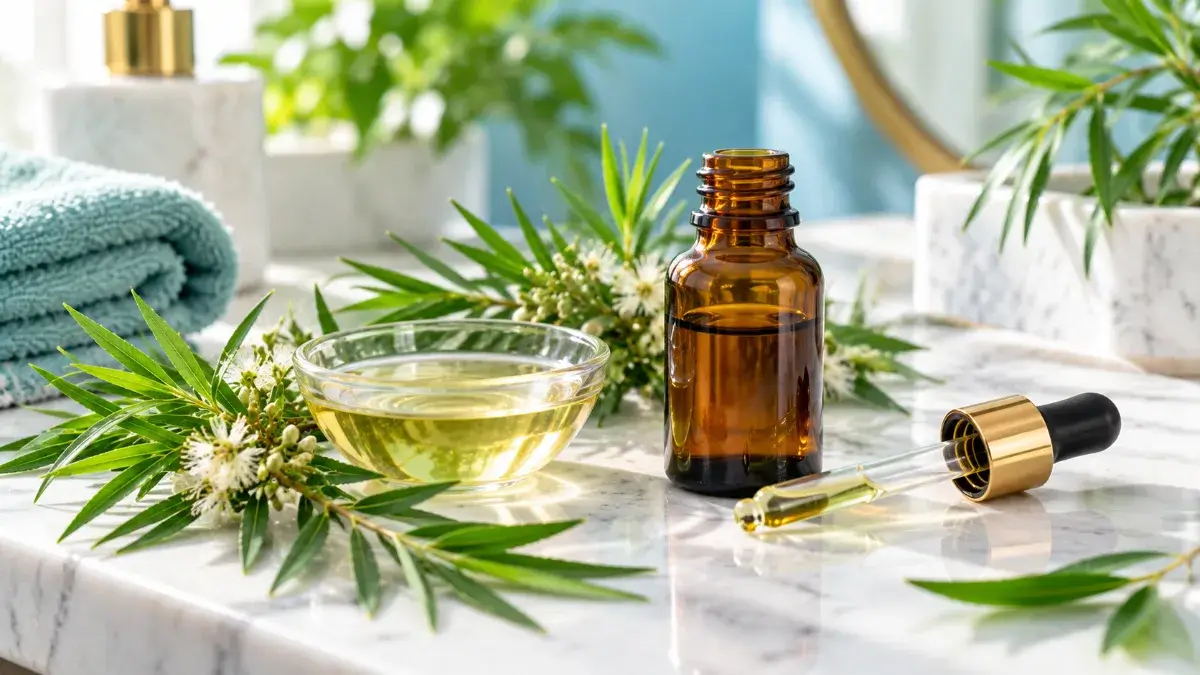
Does Tea Tree Oil Actually Work for Acne?
Yes, but with realistic expectations. Tea tree oil contains terpinen-4-ol, which has antimicrobial action against acne-causing bacteria and can calm inflamed pimples over several weeks, not overnight. Tea tree oil contains terpinen-4-ol, a compound with significant antimicrobial effects that works by targeting the bacteria that contribute to acne formation.
Clinical research backs this up. A single-blind, randomised clinical trial on 124 patients evaluated 5% tea-tree oil gel against 5% benzoyl peroxide and found both had a significant effect in reducing inflamed and non-inflamed acne lesions, though tea tree oil worked more slowly. Importantly, patients treated with tea-tree oil experienced fewer side effects compared to benzoyl peroxide.
A more recent meta-analysis reinforces this: synthesising data from seven studies involving 445 participants suggests that tea tree oil is associated with a reduction in acne lesion counts and a lower acne severity index compared to control conditions. So tea tree oil is a reasonable, gentler option for mild to moderate acne, but it is not a replacement for prescription treatment if your acne is severe or cystic.
Why You Must Dilute Tea Tree Oil Before Using It on Acne
Tea tree oil is a concentrated essential oil, not a ready-to-use skincare product. In its pure form, tea tree oil can cause dryness, blisters and rashes, so it must be diluted with a carrier oil before use. Applying it neat on pimples, especially on sensitive Indian skin that is already dealing with heat, humidity, and pollution, raises the risk of burning sensation, redness, and peeling.
Dilution does not reduce its usefulness; research on acne used tea tree oil at concentrations as low as 5%, so a well-diluted mix still delivers benefits with far less risk.
Tea Tree Oil for Acne: The Right Dilution Ratio
The safest approach is to keep facial concentrations low, generally between 1% and 5%, and increase gradually only if your skin tolerates it well.
- For sensitive or dry skin (1% dilution): 1 drop of tea tree oil per 1 teaspoon (5 ml) of carrier oil.
- For standard use on normal/combination skin (2% dilution): 2 drops of tea tree oil per 1 teaspoon (5 ml) of carrier oil.
- For targeted spot treatment on active pimples (up to 5%): 2 to 3 drops of tea tree oil mixed into 1 teaspoon of carrier oil, applied only on the blemish, not the whole face.
Several dermatology-reviewed sources confirm a similar baseline: if you’re diluting the tea tree oil yourself, you should add approximately 12 drops of carrier oil for every one to two drops of tea tree oil. Whichever ratio you follow, never go above a 5% concentration for facial use, since higher percentages do not yield better results and instead increase the risk of contact dermatitis.
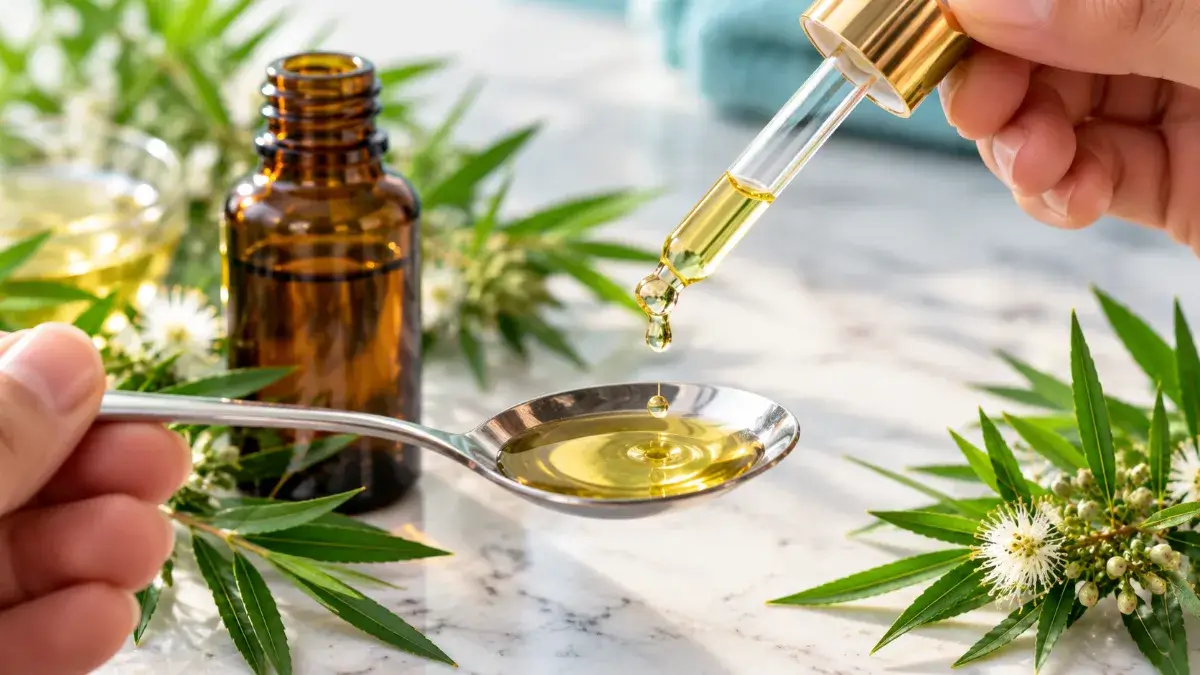
Best Carrier Oil for Tea Tree Oil (And Why It Matters)
A good carrier oil for tea tree oil dilutes its strength, reduces irritation, and helps it spread evenly without clogging pores. Choose based on your skin type:
- Tea tree oil and coconut oil: A popular, easily available combination in India. Coconut oil is moisturising and has mild antimicrobial properties of its own, but it is comedogenic for some people, so it suits dry or normal skin better than very oily, breakout-prone skin.
- Jojoba oil: Closely resembles the skin’s natural sebum and is non-comedogenic, making it a good base oil for tea tree oil on oily or acne-prone skin.
- Aloe vera gel: A good non-oily alternative for people who find oils too heavy; it also helps calm redness around active pimples.
- Almond or olive oil: Gentle options, though slightly heavier; better suited for dry patches than for very oily T-zones.
Avoid using water alone as a diluent, since tea tree oil does not mix evenly with water and can irritate skin unevenly when applied this way.
How to Use Tea Tree Oil for Acne: Step-by-Step
- Patch test first. Mix a small amount of diluted tea tree oil and apply it to your inner forearm or behind the ear. Wait 24 hours and check for redness, itching, burning, or swelling before using it on your face.
- Cleanse your face. Wash with a mild, acne-friendly face wash and pat your skin dry. If you’re unsure which cleanser suits acne-prone skin, this comparison of cleanser vs. face wash for oily and dry skin can help you pick correctly.
- Prepare the diluted mix. Combine your chosen ratio (1–5%) of tea tree oil with your carrier oil in a small bowl.
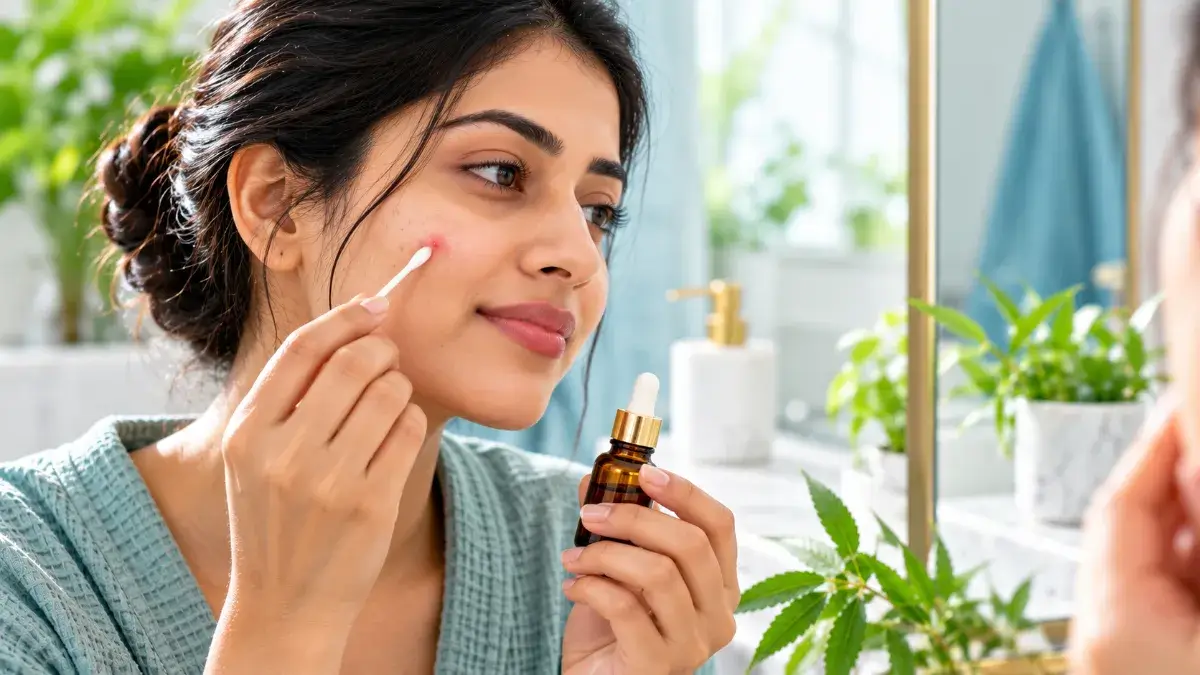
- Apply with a cotton swab. Dab the mixture directly onto individual pimples rather than spreading it over your entire face, especially when starting out.
- Let it absorb, then moisturise. Allow the spot treatment to dry before applying a lightweight, non-comedogenic moisturiser.
- Repeat once or twice daily. Most guidance suggests using it once a day initially, moving to twice daily (morning and night) once your skin shows it tolerates the oil well.
Spot Treatment vs. Full-Face Use
| Method | Concentration | Best For |
|---|---|---|
| Spot treatment | 2–5% | Active, isolated pimples |
| Full-face application | 1–2% | Prevention on acne-prone but currently clear skin |
| Added to cleanser | A few drops per wash | Oily, breakout-prone skin as a daily add-on |
Full-face use needs a gentler concentration than spot treatment because the entire face is more likely to include thinner skin near the eyes, nose, and lips.
How Long Does It Take to See Results?
Expect visible improvement over 4 to 6 weeks of consistent use, not overnight. In a randomized, double-blind, placebo-controlled trial of a 5 percent topical tea tree oil gel, after six weeks the tea tree oil group experienced a 40 percent drop in whiteheads and blackheads, a 40 percent drop in red and tender acne bumps, and a 47 percent drop in pus-filled pimples. If you see no change after 6–8 weeks, or your acne worsens, it’s time to consult a dermatologist rather than increasing the concentration on your own.
Who Should Avoid Tea Tree Oil for Acne
- People with known allergies to tea tree oil or other essential oils. A small percentage of people, approximately 1.4%, are allergic to tea tree oil.
- Those with eczema, rosacea, or very reactive, broken, or sunburnt skin.
- Pregnant or breastfeeding women should check with a doctor before using any essential oil on the skin, as safety data for topical essential oils in pregnancy is limited.
- Young children — tea tree oil should not be used on infants or toddlers’ skin without medical advice.
- Anyone already using strong actives like retinoids, salicylic acid, or benzoyl peroxide, since layering tea tree oil on top can increase dryness and irritation. If you’re already using an acid-based treatment, see this guide on how to use salicylic acid serum for pimples to avoid combining too many actives at once.
Precautions to Keep in Mind
- Never apply tea tree oil undiluted on your face, even for a single stubborn pimple.
- A patch test reduces risk but does not guarantee you won’t react later, especially with repeated use, so watch your skin each time you apply it.
- Stop immediately if you notice burning, excessive redness, swelling, or peeling, and wash the area with plain water.
- Store tea tree oil in a dark, cool place, as it oxidises and becomes more irritating over time once exposed to air and light.
- Avoid the eye area, lips, and any broken or actively inflamed skin.
- Oily additions to the face, including diluted tea tree oil, can sometimes worsen acne in people with very oily skin, so introduce it slowly and watch how your skin responds. If breakouts are linked to your current routine, these common oily skin mistakes that worsen acne are worth checking.
Other Ways to Support Acne-Prone Skin
Tea tree oil works best as part of a complete routine, not a standalone fix. Gentle cleansing, non-comedogenic moisturising, and sun protection all matter for acne-prone skin. For more non-chemical options, these simple home remedies for glowing skin and tips to minimise open pores can complement your acne care without overloading your skin with actives.
Conclusion
Tea tree oil for acne can genuinely help with mild to moderate breakouts when diluted correctly, between 1% and 5% in a suitable carrier oil, and used consistently as a spot treatment. Patch test every new batch, introduce it slowly, and see a dermatologist if your acne is severe, cystic, or not improving after 6–8 weeks.
Frequently Asked Questions
Q. Can I mix tea tree oil and coconut oil directly for acne?
Yes, tea tree oil and coconut oil is a common combination, but keep the ratio around 1–2 drops of tea tree oil per teaspoon of coconut oil. Coconut oil can be slightly comedogenic for some people, so those with very oily skin may prefer a lighter carrier oil like jojoba.
Q. Can I use tea tree oil overnight on a pimple?
A diluted, low-concentration mix (around 1–2%) can usually be left on overnight as a spot treatment, but always patch test first and discontinue if you notice irritation the next morning.
Q. Is tea tree oil better than benzoyl peroxide for acne?
Not necessarily better, but gentler. Research comparing the two found that benzoyl peroxide worked faster on inflamed pimples, while tea tree oil caused fewer side effects, making it a reasonable choice for sensitive skin or mild acne.
Q. How often should I apply diluted tea tree oil on acne?
Start with once daily to see how your skin reacts, then move to twice a day, morning and night, once you know your skin tolerates it well.
Q. Can tea tree oil remove acne scars?
There isn’t reliable evidence that tea tree oil fades acne scars or dark spots; its proven benefit is in reducing active inflamed lesions, not pigmentation. For scar and dark spot concerns, a dedicated routine is more effective.