Turmeric oil for skin works mainly by reducing inflammation, fighting acne-causing bacteria, and gently brightening dull or uneven skin tone when it is properly diluted with a carrier oil. It should never be applied undiluted, as pure turmeric essential oil is highly concentrated and can irritate or stain the skin.
This guide covers how turmeric oil benefits Indian skin, safe ways to use haldi oil at home, simple DIY mixes, and the precautions every reader should know before trying oil with turmeric on the face.
What Is Turmeric Oil?
Turmeric oil (also called tumeric oil or haldi oil) is extracted from the turmeric rhizome and contains concentrated curcumin, the compound responsible for turmeric’s colour and most of its antioxidant and anti-inflammatory activity. Turmeric is a common ingredient in cosmetic and personal care products, where it is recognised for its skin-conditioning and antioxidant properties.
Pure turmeric essential oil is very different from turmeric powder used in kitchen cooking or traditional face packs. It is far more concentrated, so it always needs dilution before touching the skin.
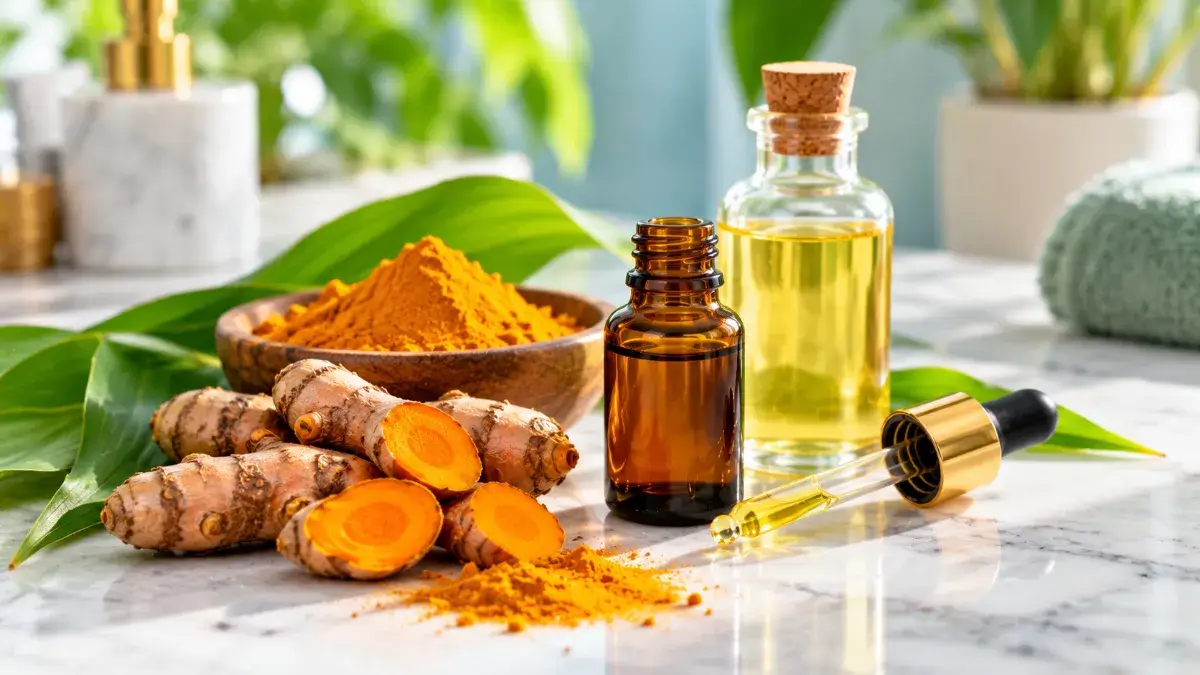
Turmeric Oil Benefits for Skin
When diluted correctly, turmeric and oil combinations can support several common Indian skin concerns. Here are the main turmeric oil benefits backed by available evidence and traditional use:
1. May Help Calm Acne and Breakouts
Research suggests that turmeric oil may help with acne, in part because it has anti-microbial effects, and one small study found that an oral turmeric supplement plus a topical cream containing turmeric showed the biggest improvement in acne. This means turmeric oil may support acne-prone skin as a complementary step, not a standalone acne treatment.
2. Helps Soothe Redness and Inflammation
Turmeric’s curcumin content gives it calming properties. The high levels of curcumin found in turmeric produce a cooling and soothing feeling due to its anti-inflammatory properties, and applying it to red or inflamed skin could ease and bring a sense of calm back to the skin.
3. May Fade Marks and Even Out Skin Tone
Turmeric is often used as an ingredient to reduce and fade marks and blemishes and is commonly found in anti-spot creams, with regular use helping fade marks over time. If dark spots or pigmentation is your main concern, pair turmeric oil with a focused routine like this 2-step night routine for pigmentation and dark spots.
4. Supports Skin Hydration When Mixed With a Carrier Oil
Natural oils like turmeric oil help lock in moisture and, when combined with a carrier oil, can help protect the skin from environmental irritants. This is especially useful during Indian winters when skin tends to feel drier; you can read more about why skin gets dry in winter and mistakes to avoid.
5. Antioxidant Support Against Environmental Stress
Turmeric has potential benefits for skin health, from supporting skin hydration and skin tone to helping protect against environmental stressors, which is relevant for city dwellers dealing with pollution and sun exposure.
How to Use Turmeric Oil for Skin Safely
The single most important rule for using turmeric oil for skin is dilution. Always mix it with a carrier oil such as jojoba, almond, or coconut oil, and never apply undiluted turmeric oil directly to the skin.
Step-by-Step: Turmeric Face Oil Blend
- Choose a carrier oil suited to your skin type, such as coconut oil for dry skin or jojoba oil for oily or combination skin.
- Mix 1–2 drops of turmeric essential oil with about 1 teaspoon of the carrier oil.
- Cleanse your face first and pat it dry. You can follow a simple face clean-up routine at home before applying any oil.
- Apply the blend to your face and neck using gentle upward massage motions, avoiding the eye area.
- Leave it on overnight or for at least 20–30 minutes before rinsing, then follow with your regular moisturiser.
Best Time to Apply Turmeric Oil
Night-time use is generally recommended. It is best to use turmeric oil in the evening, as this allows the oil to soak in overnight and reduces the risk of your face looking yellow during the day. If you are worried about temporary yellow staining, mix just one drop into your regular night moisturiser instead of using it alone.
DIY Turmeric Oil Face Mask Recipe
You can also combine haldi oil with kitchen ingredients for an occasional at-home mask:
- 2–3 drops of diluted turmeric oil (already mixed with a carrier oil)
- 1 teaspoon raw honey
- A few drops of fresh lemon juice (optional, skip if you have sensitive or broken skin)
Mix the ingredients into a smooth paste, apply evenly, and leave on for around 15–20 minutes before rinsing with lukewarm water. Avoid this mask if you are using retinol, AHAs, or BHAs on the same day, since combining actives with lemon juice can increase irritation. If you enjoy clay-based masks, you can also explore Multani mitti benefits and uses as an alternative weekly treatment.

Who Should Use Turmeric Oil and Who Should Avoid It
| Can Generally Use (with care) | Should Avoid or Consult a Doctor First |
|---|---|
| Oily or acne-prone skin, diluted and used occasionally | People with a known turmeric or ginger-family allergy |
| Dull or uneven-toned skin, mixed with a hydrating carrier oil | Very sensitive or eczema-prone skin without medical advice |
| Normal to combination skin, used 2–3 times a week | Pregnant or breastfeeding women without consulting a doctor |
| Dry skin, when paired with a rich carrier oil | Anyone currently on blood thinners or diabetes medication without medical advice |
If you have very delicate skin, allergies to essential oils, or are pregnant or breastfeeding, you should seek professional advice before use. Turmeric may also interact with certain medications, including blood thinners and diabetes drugs, so individuals with medical conditions should consult a healthcare provider before incorporating it into their skincare.
Precautions and Side Effects of Turmeric Oil
Turmeric oil is generally well tolerated, but a few precautions matter, especially for first-time users:
- Always patch test first. Apply a small amount to the inner forearm and wait 24–48 hours; if redness, itching, or swelling occurs, discontinue use immediately. Remember that a patch test lowers risk but does not guarantee the product will never cause a reaction later.
- Expect temporary yellow staining. Turmeric has a naturally strong yellow pigment, which means it may temporarily stain skin, fabrics, or surfaces. This fades within a few hours and is not harmful.
- Watch for allergic reactions. Possible reactions include itching or skin rash, and bumps on the skin called hives that can be red, pink, white, or brown depending on your skin tone.
- Avoid overuse. Overuse can disrupt the skin’s natural oil balance, leading to dryness or irritation, so limit use to a few times a week rather than daily unless your skin tolerates it well.
- Keep away from sensitive areas. Turmeric oil must never be used near the eyes, inner nose, ears, or any other particularly sensitive areas of skin.
- Check for allergy history. Doctors do not recommend turmeric for individuals who are allergic to plants in the ginger family.
If you notice persistent redness, burning, or swelling that does not settle within a day, stop using the oil and consult a dermatologist. You can learn more about general skin inflammation and allergic reaction symptoms from the NHS page on contact dermatitis.
Turmeric Oil vs Turmeric Powder: Which Is Better?
Many Indian households already use turmeric powder in homemade face packs, but turmeric oil (haldi oil) is a more concentrated form. Powder mixed with besan, curd, or honey is milder and better suited for frequent use, while essential oil delivers a stronger dose of curcumin and should be used more sparingly and always diluted. For readers who prefer gentler, powder-based options, these 17 home remedies for glowing skin offer safer everyday alternatives.
निष्कर्ष | Conclusion
Turmeric oil for skin can support a brighter, calmer complexion, but only when diluted properly with a carrier oil and used in moderation. Start with a patch test, apply it at night 2–3 times a week, and pair it with a good moisturiser. If irritation, persistent redness, or allergic symptoms appear, stop use and speak to a dermatologist before trying it again.
Frequently Asked Questions
Q. Can I apply turmeric oil directly on my face without diluting it?
No, it is not recommended to use turmeric oil directly on the skin. Always dilute it with a carrier oil first to reduce the risk of skin sensitivity.
Q. How often can I use turmeric oil on my skin?
Most sources suggest using diluted turmeric oil two to three times a week rather than daily, since overuse can disrupt your skin’s natural oil balance and cause dryness or irritation.
Q. Will turmeric oil make my skin look yellow?
It can cause temporary yellow staining because of its natural pigment, which usually fades within a few hours. Applying it at night and washing it off in the morning reduces visible staining during the day.
Q. Is turmeric oil safe for acne-prone and oily skin?
Diluted turmeric oil may help with acne due to its anti-microbial and anti-inflammatory effects, making it reasonably suitable for oily and acne-prone skin when used in moderation. It should still be patch tested first, especially if you already use other active ingredients.
Q. Can pregnant women use turmeric oil on their skin?
Pregnant or breastfeeding women should seek professional medical advice before using turmeric oil, as with most concentrated essential oils. This precaution is recommended even though topical turmeric is generally considered mild.
Q. What carrier oils work best with turmeric oil?
Coconut, almond, jojoba, and olive oil are commonly used carrier oils for diluting turmeric oil, and the right choice depends on your skin type, with lighter oils like jojoba suiting oily skin and richer oils like coconut suiting dry skin.