Curd for hair works mainly as a natural conditioner and mild scalp cleanser. Its protein, fatty acids and lactic acid can soften dry strands, calm an itchy scalp and add shine, though most benefits come from traditional use rather than large clinical studies. Below you’ll find the real benefits of using curd on hair, 4 easy DIY masks, and the precautions most articles skip.
Is Curd Good for Hair?
Yes, curd is generally good for hair when used correctly, especially for dryness, dullness and mild dandruff. Curd contains nutrients that could potentially help scalp conditions and moisturize and strengthen your hair, though there are no available long-term studies on the use of curds for scalp and hair health. This means curd can be a helpful, low-cost addition to your routine, but it is not a medical treatment for hair loss or severe dandruff.
If you also deal with hair fall along with dullness, pairing curd masks with proven habits from our guide on hair care tips to control hair fall will give you better overall results.
6 Benefits of Curd for Hair
Here are the main, well-documented benefits of curd for hair that Indian readers commonly ask about.
1. Acts as a Natural Conditioner
Curd softens hair strands and improves manageability. Curd contains nutrients that could potentially treat scalp conditions and help to moisturize and strengthen your hair. This is considered one of the more credible, commonly reported benefits of applying curd on hair.
2. May Help Reduce Dandruff
Curd is often used as a home remedy for flaky scalp. Some claim that curd is a natural anti-dandruff product due to its anti-inflammatory properties, and you may also see curd touted as being antimicrobial to help treat scalp infections. These claims are based on traditional use, so if your dandruff is persistent or severe, see a dermatologist rather than relying only on curd.
3. Softens Dry and Frizzy Hair
Curd’s fatty acids and proteins help smooth the hair cuticle. The proteins in curd help fill in microscopic gaps in the hair cuticle which is why hair often feels smoother and less frizzy after a curd mask, especially useful in India’s dry winters or humid summers.
4. Adds Shine to Dull Hair
Regular use can make dull strands look glossier. Fatty acids in the curd promote mild shedding of dead skin cells, making room for oxygen-rich cells, which provides shine and strength to the scalp and overall hair by locking in moisture.
5. May Support a Healthier Scalp
A clean, balanced scalp supports better hair growth over time. Massaging curd into the scalp stimulates blood flow, ensuring nutrients reach the hair follicles more efficiently. This doesn’t guarantee faster hair growth, but a healthy scalp environment is an important foundation.
6. Gentle, Budget-Friendly Alternative to Chemical Conditioners
Curd is an affordable option compared to salon treatments. Adding curd for hair to your routine provides an affordable and natural alternative to chemical treatments, making it accessible for most Indian households. For long-term hair growth support, you can also explore rosemary oil for hair growth alongside your curd routine.
4 DIY Curd Hair Masks You Can Try at Home
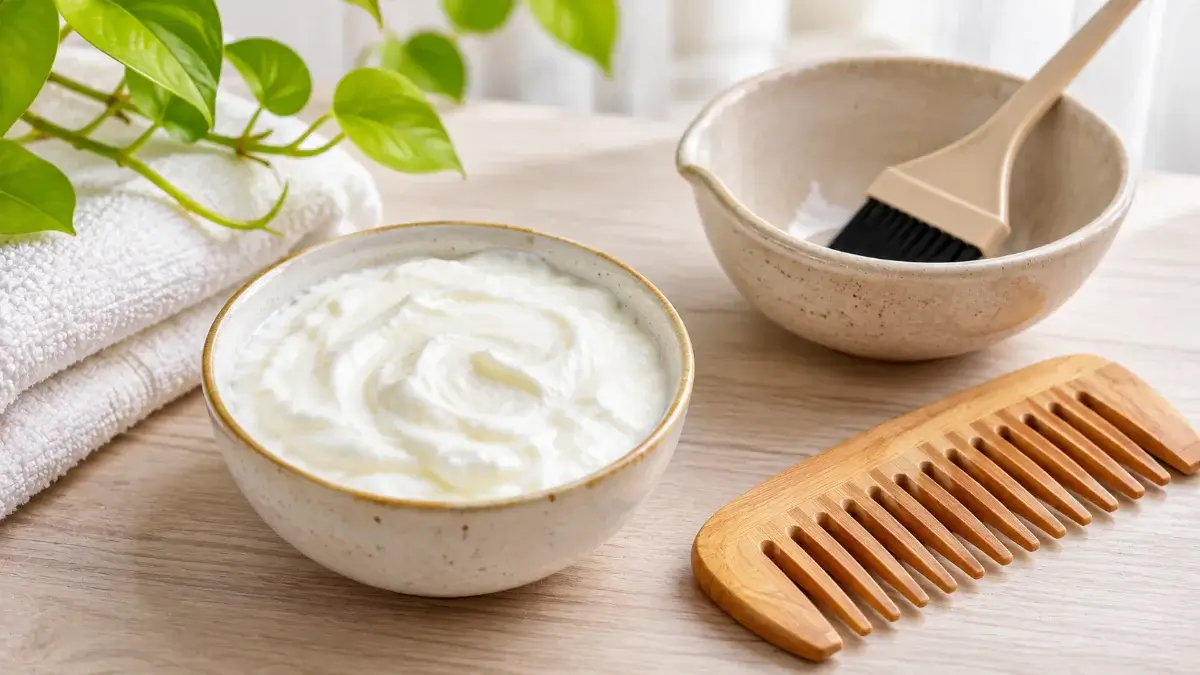
Use fresh, plain, unsweetened curd for all these masks. Always do a patch test on your inner elbow and wait 30 minutes before applying any new mask to your scalp, since curd can trigger reactions in people with milk allergies.
1. Plain Curd Mask (For Beginners)
- Whisk 1 cup of fresh curd until smooth.
- Apply to damp, detangled hair from roots to tips.
- Cover with a shower cap and leave for 20–30 minutes.
- Rinse with lukewarm water and follow with a mild shampoo.
This basic mask is a good starting point if you’re trying curd for the first time, as it has the lowest chance of irritation.
2. Curd and Lemon Mask (For Dandruff-Prone Scalp)
- Mix 1 cup curd with 1–2 tablespoons of fresh lemon juice.
- Apply to the scalp and massage gently for 2–3 minutes.
- Leave on for 20 minutes, then rinse with lukewarm water.
Lemon’s natural antifungal properties help combat dandruff and deeply cleanse the scalp, while curd’s anti-inflammatory and hydrating benefits soothe irritation. Skip this mask if you have an open wound, cuts, or very sensitive, broken skin on the scalp, as lemon’s acidity can sting.
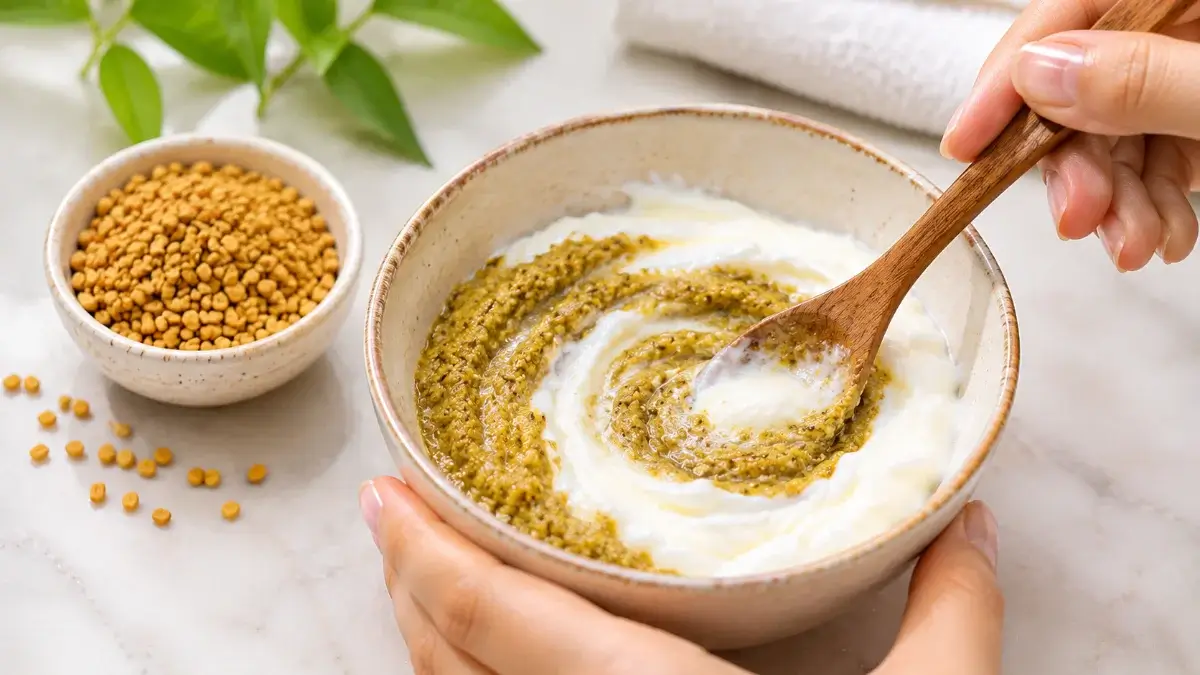
3. Curd and Fenugreek (Methi) Mask (For Hair Growth Support)
- Soak 2 tablespoons of fenugreek seeds overnight and grind into a paste.
- Mix the paste with 1 cup of curd.
- Apply from roots to tips and leave for 30 minutes.
- Rinse thoroughly with lukewarm water and shampoo.
This combination is popular for scalp nourishment and is often paired with other Ayurvedic ingredients. If you also notice a lot of shedding, check our detailed guide on home remedies for hair fall for additional steps.
4. Curd and Honey Mask (For Dry, Damaged Hair)
- Mix 1 cup curd with 2 tablespoons of raw honey.
- Apply evenly on dry, damaged lengths and ends.
- Leave on for 25–30 minutes, then rinse with lukewarm water.
Applying a hair mask prepared by combining curd and honey helps moisturise your hair and restore its natural shine. This mask works well for chemically treated or heat-damaged hair.
How to Use Curd for Hair the Right Way
- Always use fresh, plain curd; stale or sour curd can smell unpleasant and irritate the scalp.
- Apply on damp, unoiled hair. It is not advisable to apply curd on already oiled hair, as it will limit the absorption ability of the scalp and hair.
- Leave the mask on for 20–30 minutes only. Don’t leave curd on hair for more than 30–45 minutes.
- Rinse with lukewarm water, not hot water, since heat can curdle the proteins and make them stick to the hair.
- Use a curd hair mask once a week or once in two weeks; daily use is unnecessary and may cause buildup.
Side Effects and Who Should Avoid Curd on Hair
Curd is generally safe for most people, but it isn’t risk-free for everyone.
- Milk allergy: Those who are allergic to milk, they may also be allergic to curd. Avoid curd masks if you have a known dairy or milk protein allergy.
- Oily scalp: Frequent use of curd on oily hair may increase greasiness. If your scalp is already oily, limit use to once every 10–15 days and rinse thoroughly.
- Lactose intolerance: People who are lactose intolerant should be cautious, as some may experience skin reactions even with topical use.
- Unpleasant smell: Residue left behind after an incomplete rinse can cause a sour smell; always follow up with a mild shampoo.
- Overuse: Excessive or very frequent application may disturb the scalp’s natural pH balance and, in some cases, lead to protein buildup and stiffness.
Stop using curd immediately if you notice itching, burning, redness, or a rash, and consult a dermatologist if symptoms persist. A patch test reduces risk but does not guarantee you won’t react, so always monitor your scalp after application.
For readers dealing with an oily scalp alongside dandruff, our article on how to get rid of an oily scalp naturally covers additional routine adjustments that pair well with occasional curd masks.

Conclusion
Curd for hair is a simple, affordable way to add moisture, softness and mild dandruff relief to your hair care routine. Use fresh curd once a week, patch test first, and rinse thoroughly to avoid greasiness or smell. If dandruff, hair fall or scalp irritation continues despite regular use, consult a dermatologist instead of relying only on home remedies.
Frequently Asked Questions
Q. Can I apply curd on hair daily?
No, daily use is not recommended. Using a curd hair mask once a week or once every two weeks is enough to see benefits without causing greasiness or scalp buildup.
Q. Does curd help with hair growth?
Curd may support a healthier scalp environment, which can indirectly help hair growth, but there is no strong clinical evidence that curd directly stimulates new hair growth. It works better as a conditioning and scalp-care ingredient.
Q. Can curd be left on hair overnight?
It’s best not to leave curd on hair overnight, as it can dry into a hard, crusty layer that is difficult to wash out and may cause breakage while detangling. Limit application to 20–30 minutes.
Q. Is curd good for oily hair and scalp?
Curd can be used on oily hair, but frequent use may increase greasiness. If your scalp is oily, use it sparingly, rinse thoroughly with a mild shampoo, and avoid heavy additions like extra oil in the mask.
Q. Should I apply curd before or after oiling my hair?
Apply curd on clean, damp, unoiled hair rather than oiled hair, since oil can prevent the curd’s nutrients from reaching the scalp and hair shaft effectively.